Understanding the Policy Shift to TOD

What is Transit-Oriented Development?
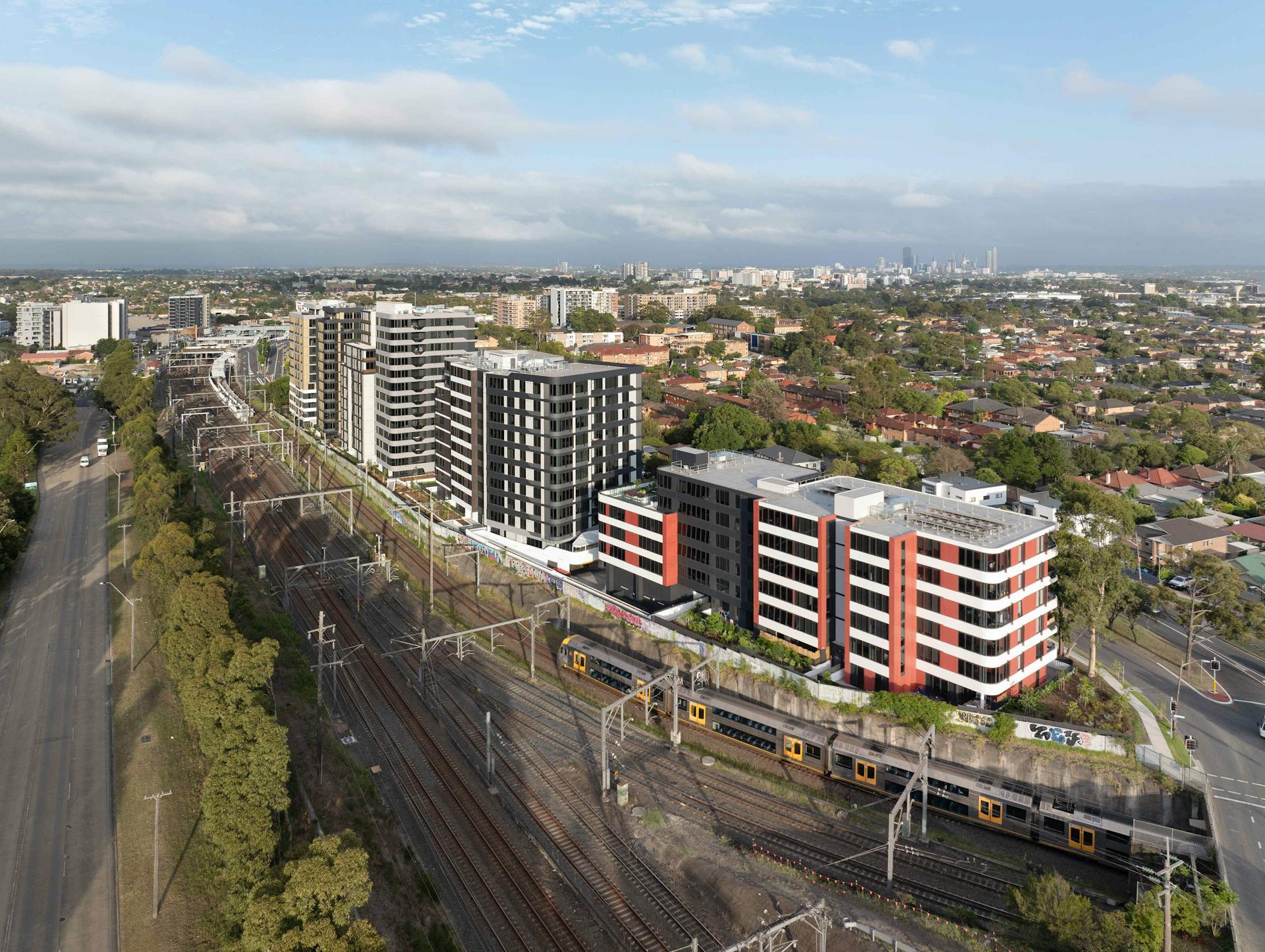
TOD is where mixed communities are built around transit nodes. The underlying principle is clear: match land-use density to transit capacity within a walkable environment—typically an 800-metre radius or about 10 minutes on foot from a transit stop.
We see TOD as the intelligent art of co-locating urban life: homes, jobs, and social infrastructure within a dynamic, walkable radius of rapid transit. The concept needs established activity centres and high-frequency rapid transit, such as electric rail or dedicated light rail, as its foundation.
Done well, this density elevates everyday experience. It transforms necessity into genuine urban life. Governments and markets are aligned on TOD because it delivers significant lifestyle and community benefits by fundamentally changing how people live and move, addressing key challenges in the process.
— Elevated Liveability + Health: TOD creates walkable neighbourhoods that cluster daily needs, encouraging residents to walk or cycle to shops, schools, and parks. This increased physical activity is associated with public health improvements.
— Reduced Transport Costs + Car Dependence: By placing homes and services near high-frequency transit, TOD makes it easy to use public transport, significantly reducing the need for car ownership. For households, this can lead to substantial cost savings on fuel, insurance, and maintenance.·
— Enhanced Household Affordability: TOD improves overall household affordability by reducing the second-largest household expense (transportation costs) and maximising land-use efficiency to deliver a greater variety of housing types and units in key areas, increasing supply.
— Measurable Environmental Performance: A shift from private vehicles to walking, cycling, and mass transit directly leads to reduced traffic congestion and lower greenhouse gas emissions, aligning with critical government sustainability goals.
— Vibrant Community Cohesion: The dense, mixed-use nature fosters a sense of place and community cohesion. Increased foot traffic supports local businesses, and well-designed public spaces create vibrant, accessible places for social interaction.
— Greater Economic and Social Access: Proximity to rapid transit provides residents with quick and reliable access to a wider range of jobs, education, and essential services across the city, which is vital for social equity and economic opportunity.
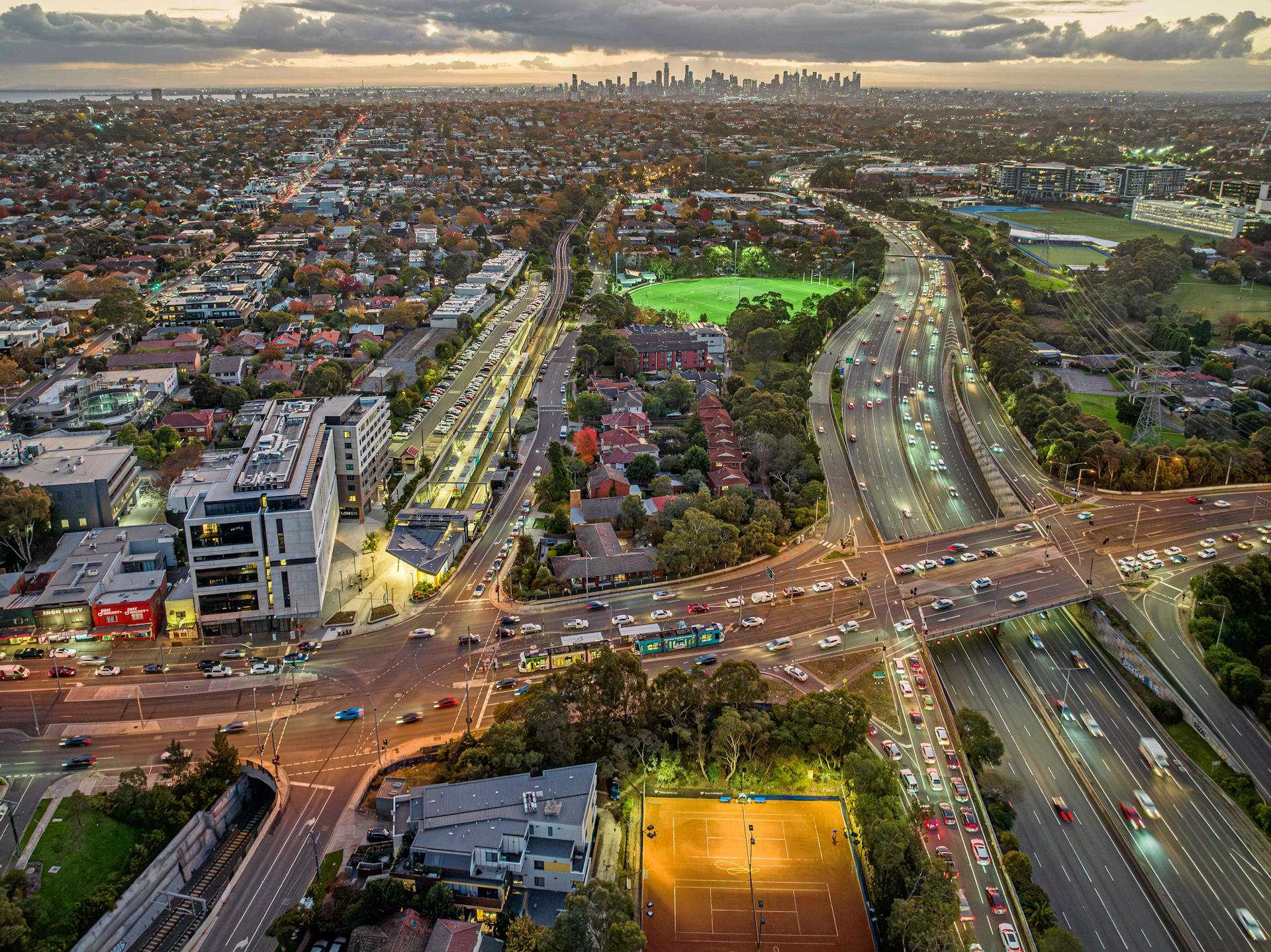
TOD precincts offer compelling commercial and strategic advantages:
— Strong Market Demand: There’s proven appetite for housing near public transit. This confirms the development strategy by aligning products with demonstrated long-term buyer/renter preferences
— Policy Support and Streamlined Approvals: Governments are actively backing TOD sites with favourable zoning, increased height limits, and faster approval pathways. The regulatory environment is highly supportive, streamlining pathways through favourable zoning, increased height limits, and faster approval processes.
— Higher Density Returns: TOD sites allow you to maximise yield per square metre. Greater density means more units, better land-use efficiency, and improved project economics.
— Resilient Asset Value: Transit infrastructure is permanent. Properties near stations hold value and attract tenants even during market fluctuations. You’re building next to assets that governments have committed billions to maintain.
— Competitive Advantage: Early movers in TOD precincts establish market presence before competition intensifies. These sites offer genuine differentiation in a crowded market.
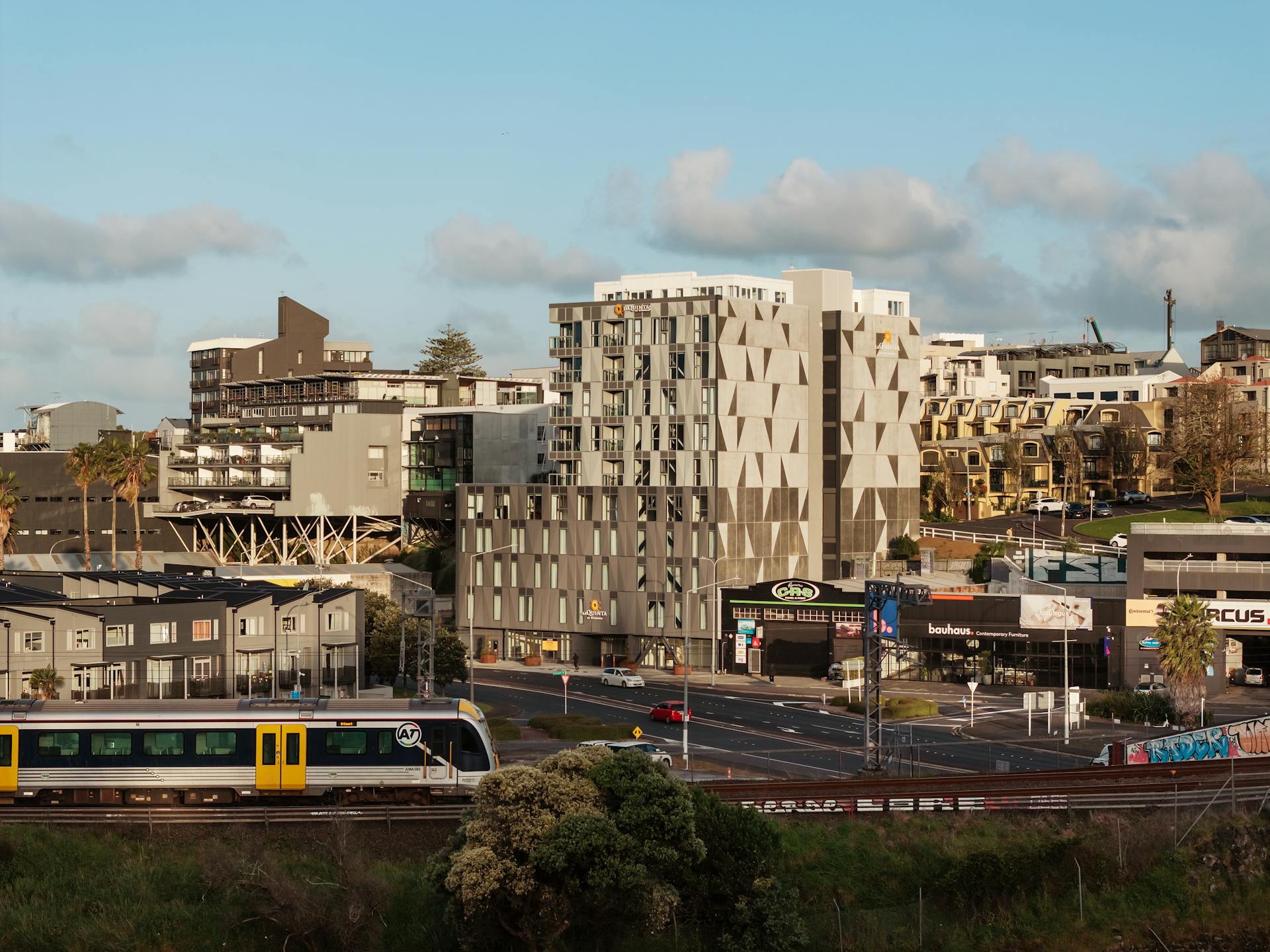
Governments are actively drawing new maps that permanently recalibrate urban gravity. This is not temporary relief; it is a structural, policy-driven shift. TOD momentum is accelerating rapidly, using major infrastructure projects as catalysts. Crucially, this planning uplift is being paired with national funding incentives and is recalibrating project feasibility through major reforms to infrastructure contribution costs and the introduction of mandatory affordable housing contributions.
New Zealand’s National Policy Statement on Urban Development compels major cities to allow greater height and density near transport hubs. This set the stage for the recent Auckland Council vote, which approved zoning for 10 to 15 storeys of residential intensification around key rail links – see the maps here. Hamilton and Wellington are also accelerating. Beyond the Suburban Rail Loop, the Victoria government is rewriting the planning rulebook entirely. Key reforms include doubling building heights in suburban activity centres, overhauling the development contributions system, and reducing per-unit infrastructure costs by up to 25% through the reformed Integrated Transport Corridors framework. See Stage 1 maps and the recently released Stage 2 maps.
New South Wales’s Accelerated Precincts program unlocks 8 strategic sites near existing and planned transport infrastructure. Approval timelines have already contracted to 12–18 months. The $200 million Faster Assessments program offers direct financial incentives to councils. Critically, mandatory affordable housing (20–25%) is paired with streamlined pathways—not imposed as an afterthought. The Regional Housing Strategic Planning Fund is available to support local councils to deliver infrastructure and strategic planning and fast-track thousands of new homes in regional areas.
Western Australia’s planning reset centres on Metronet. The government mandates integrated housing and train station precincts—a complete integration of transport with residential development. The Medium Density Housing Code lifts standards for infill housing (terraces, duplexes, small-lot housing).
In Queensland, the catalyst is Cross River Rail. This project has created statutory Priority Development Areas around new city stations, directing high-rise urban revitalisation into Woolloongabba, Bowen Hills, and South Bank. These precincts have delivered on promised approvals faster than traditional pathways.
In South Australia, the strategy blends major greenfield land release with planning system acceleration. The Future Living Code Amendment facilitates medium-density housing in established suburbs. Long-standing mandatory 15% affordable housing on rezoned land provides certainty within feasibility models. In addition, ACT’s Missing Middle Housing reforms allow townhouses and duplexes, Tasmania’s independent Development Assessment Panels remove council politics for fast-track approvals and the Northern Territory incentivises high-density living with reduced car parking requirements (up to 50% reduction near transit) and expedited land release.
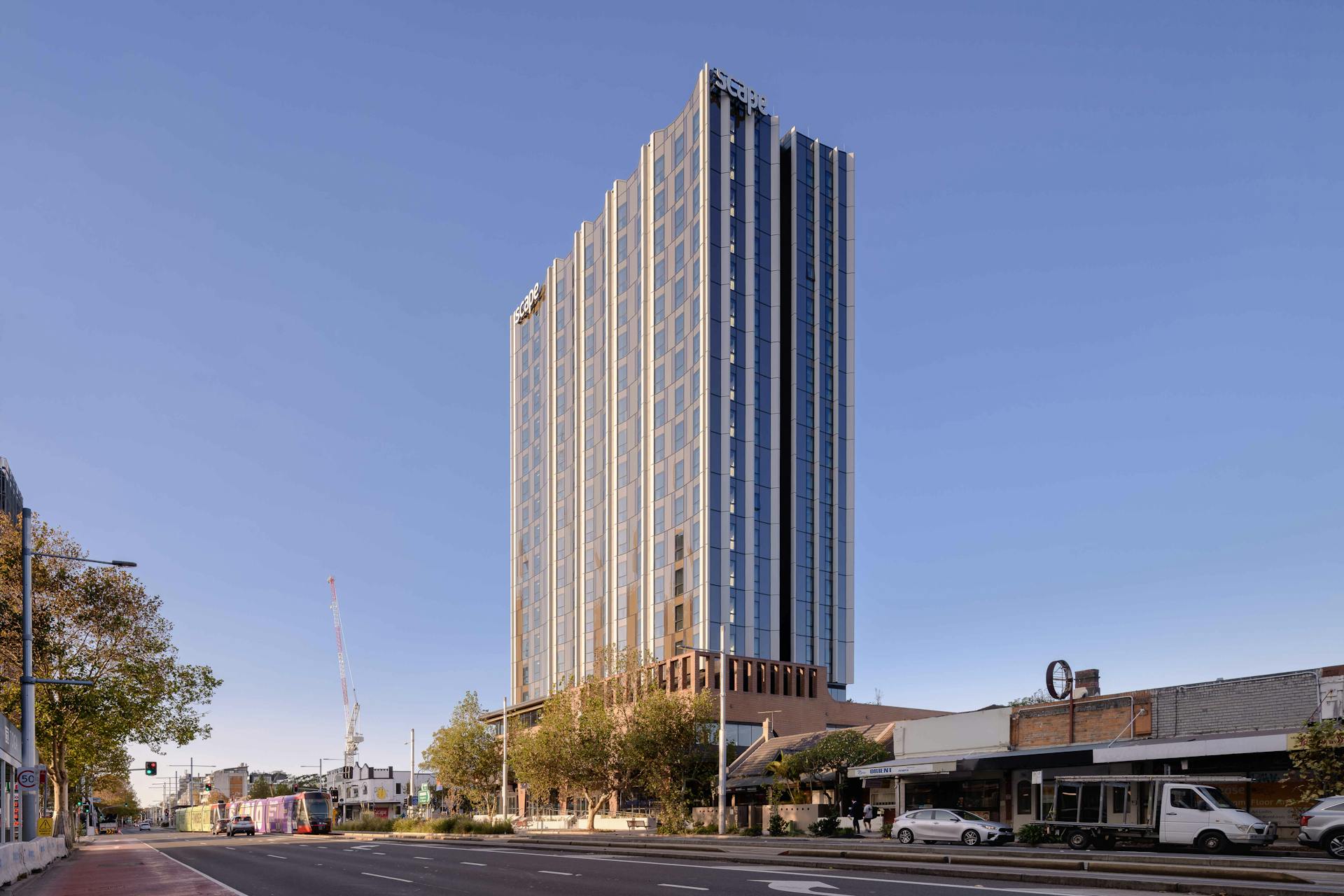
This governmental reform represents a significant design challenge and opportunity. It demands a commitment to density done well, which is the only way to ensure TODs enhance amenity, improve liveability, and create vibrant, sustainable communities.
This intelligent focus on design moves beyond simple density metrics to prioritise amenity, public space, and social integration. Successful TOD projects approach these transit nodes not as boundaries, but as complex fabrics where multiple needs intersect, requiring design to match land-use density and mix to transit capacity in a walkable environment by:
— Increasing walkability and creating a sense of place with civic uses, parks, and plazas.
— Ensuring convenient and safe entrances to transit stations that prioritise bike and pedestrian access.
— Evaluating the social equity of the development, which includes the critical provision of affordable housing.
Case Studies: Design Excellence in Action
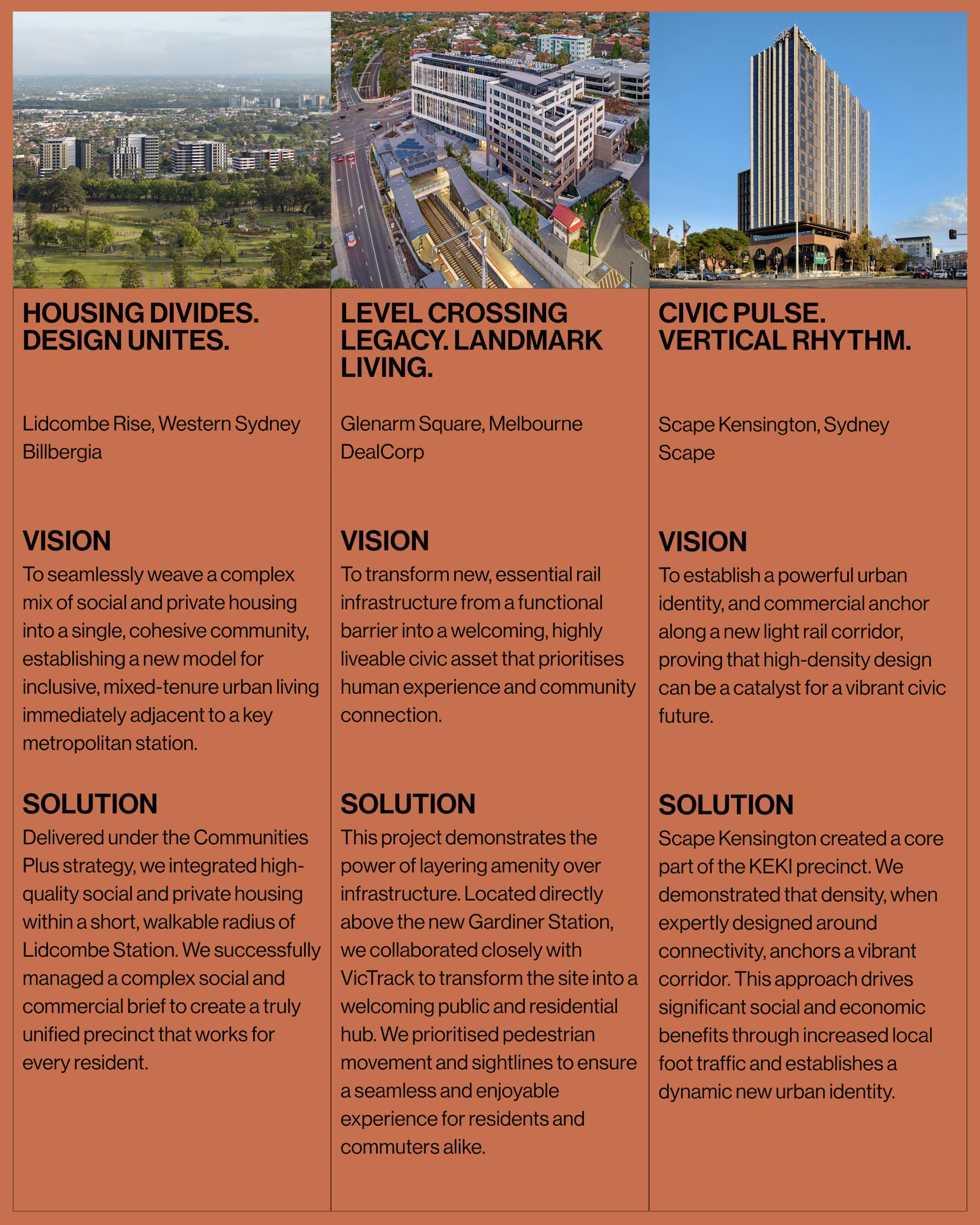
The TOD opportunity is not speculative; it is mandated and accelerating. Policy certainty has shifted the risk profile fundamentally. Success requires partners who understand that density is not an end goal—it’s a constraint that demands excellent design, clear economics, and genuine commitment to place-making.
If you’re evaluating sites near major transit infrastructure, the key questions are:
— Which precinct has the clearest approval pathway and cost certainty?
— Can the site be designed to achieve density and genuine liveability?
— What role does mixed tenure play in the project’s long-term resilience and market performance?
— How will the design anticipate future pressures (climate, work patterns, community expectations)?
Let’s discuss how our experience in navigating policy uncertainty, designing mixed-tenure at scale, and translating density into thriving places can translate into a genuine competitive advantage for your next project. Get in touch.