Restore or Retain? Why the Difference Matters More Than You Think

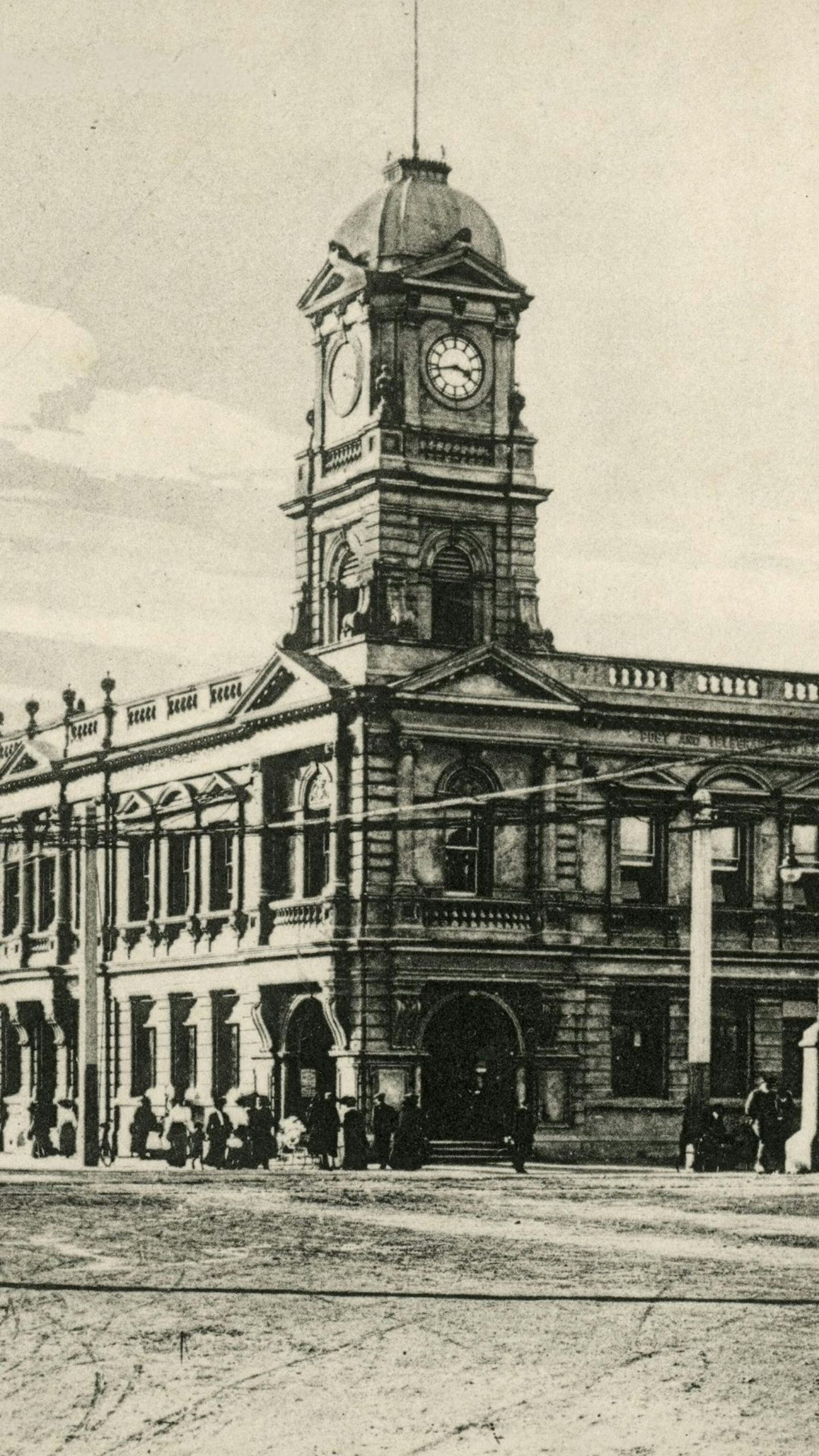
The 1905 post office on the corner of The Square and Main Street in Palmerston North has been watching the city change around it for over a century. Designed by architect Charles Worth, it anchored a regional city centre through decades of growth, accumulated additions that obscured it, lost its clock tower to demolition in the sixties, and spent the better part of a decade sitting empty. By the time Plus Studio came to it, the building had been quietly disappearing in plain sight.
That is the condition of a lot of New Zealand’s heritage stock. Gradual erasure, rarely dramatic. Rarely noticed until it is too late.
The difference between heritage as obligation and heritage as position
The heritage pathway on many development projects is essentially a negotiation over minimum compliance. Retain the facade, document what is lost, move on. What looks like restoration is often stage dressing. A historic frontage propped in front of something architecturally disconnected from it, structurally unrelated, materially unrelated. The original building becomes a frame for something that has nothing to do with it.
On the Palmerston North project, that approach was never available to us. Heritage New Zealand recognised the full facade as protected, including the roof. The building’s significance extended beneath the surface. Restoration had to be structural, material, and spatial. It had to be a position.
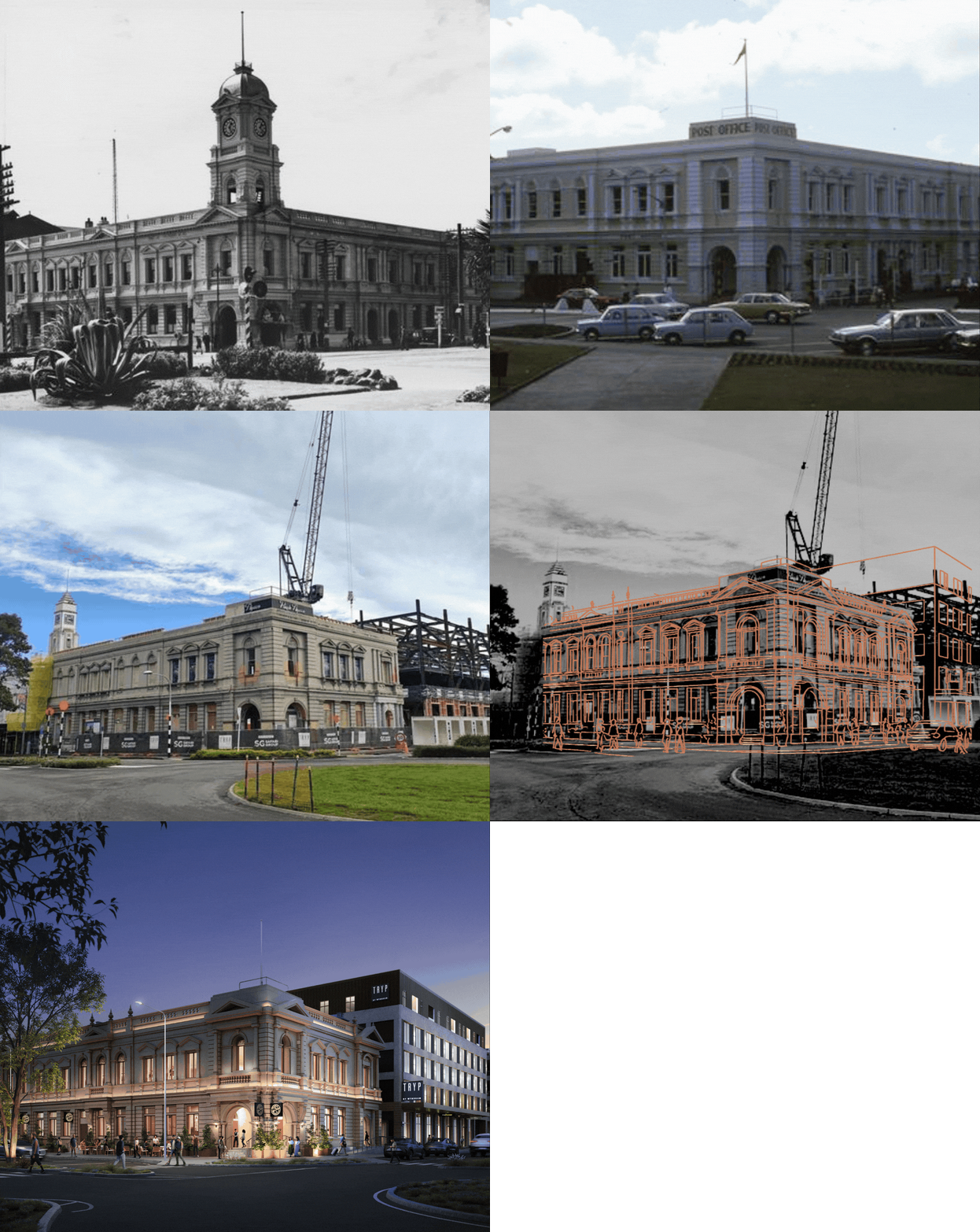
An old post office and a century of alterations
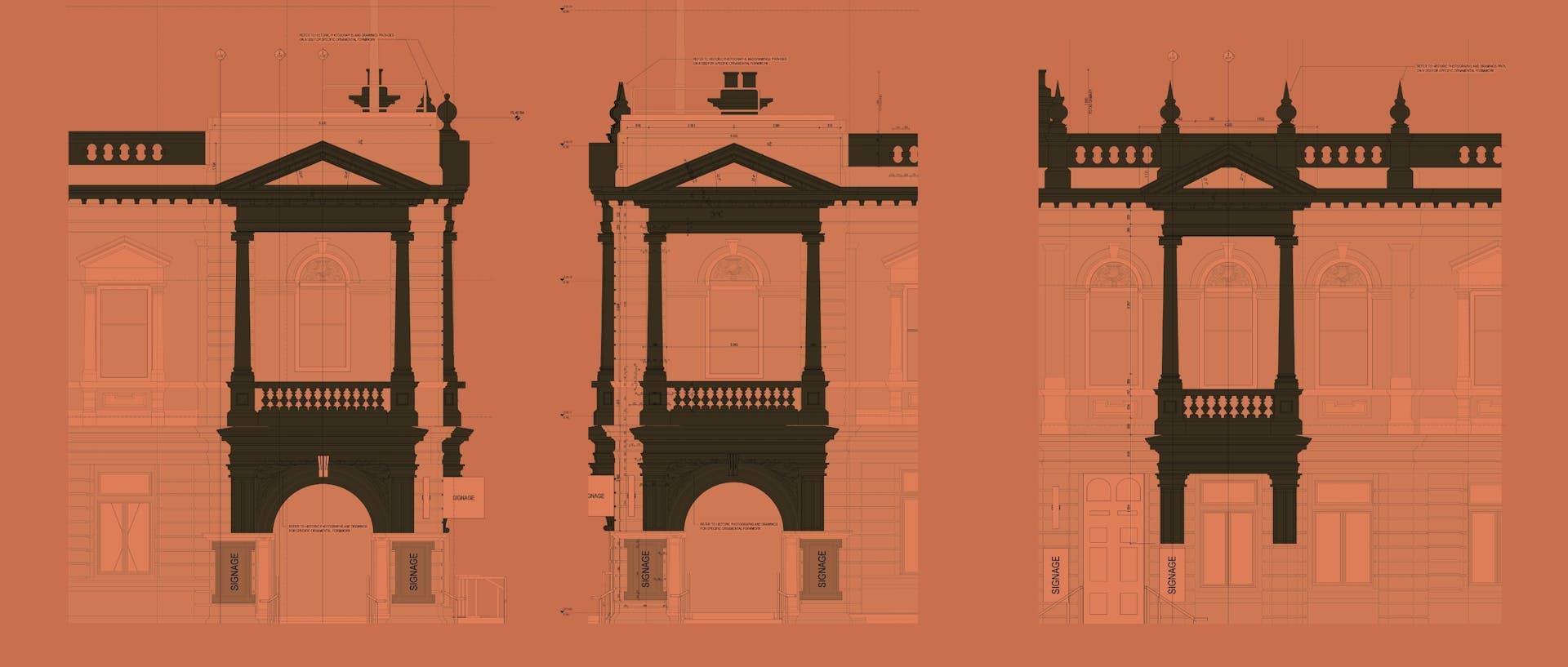
Reading the existing site meant understanding what had been added, and why those additions had to go. Decades of incremental change had buried the original. The heritage assessment process revealed the extent of it: to restore the building, we first had to strip it back. Balustrades, pediments, chimneys, original window openings, the facade pinning and structural support required to allow the building to stand independently. Each decision carried consequences for how the building would read in the city, and what story it would tell.
The clock tower presented a different kind of question. Faithful restoration or replication? These are arguments the profession has been having for decades, and the answer is never clean. What mattered here was that the decision be made with eyes open, not defaulted to.
While the new hotel was the commercial driver of the project, the original building was the design brief. Everything else followed from that.
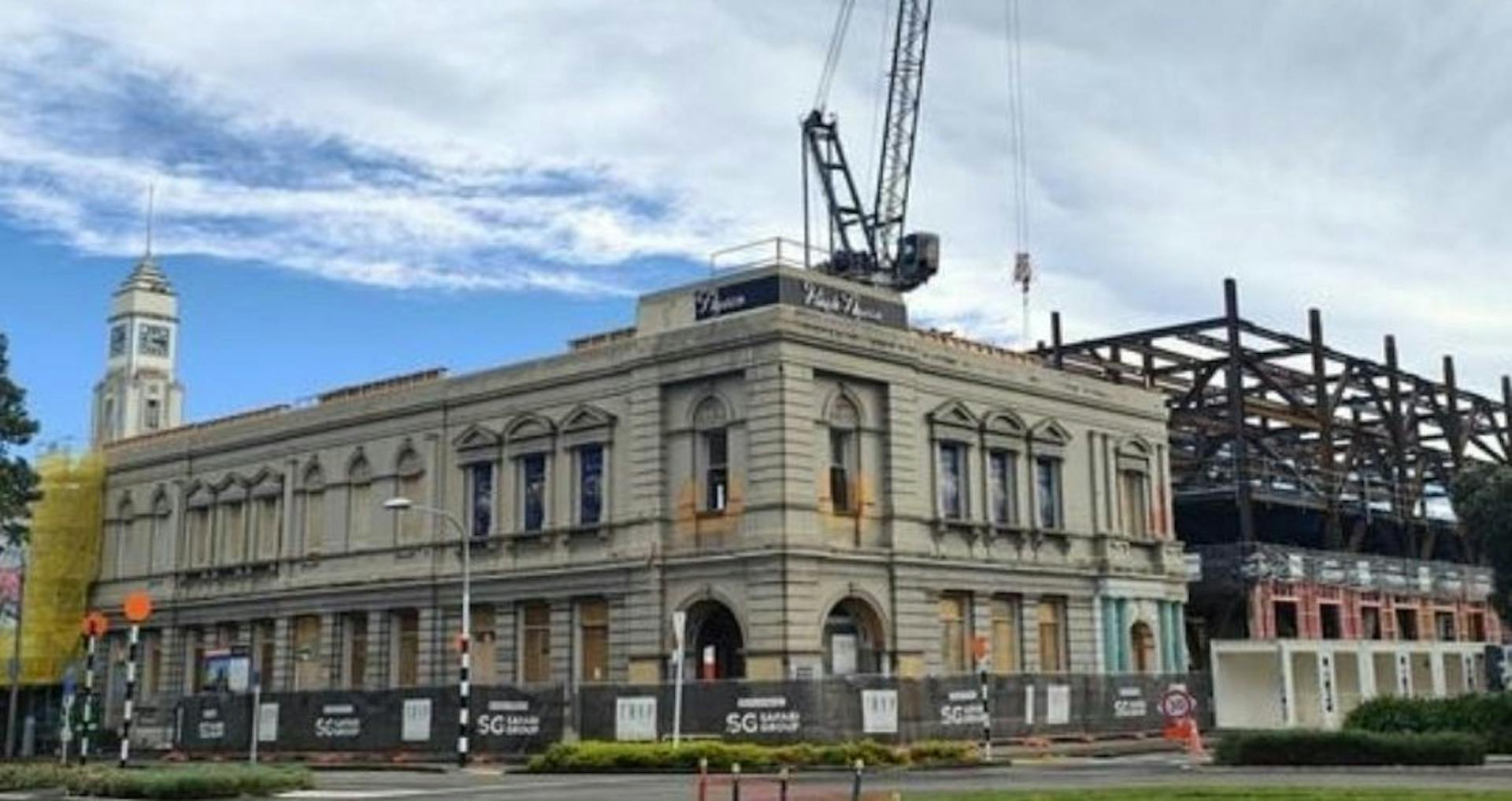
A new hotel to re-anchor a city centre
The new build sits behind and beside the restored post office. That relationship was deliberate and non-negotiable. The heritage building carries the street. The new building is its neighbour, taking its cues rather than competing with them.
Rhythm, scale, and symmetry in the new structure were drawn from the heritage analysis. The facade articulation echoes the vertical cadence of the original without imitating it. Materials provide depth and shadow rather than visual competition. The new building recedes at street level and allows the 1905 post office to hold the corner of The Square the way it was always designed to.
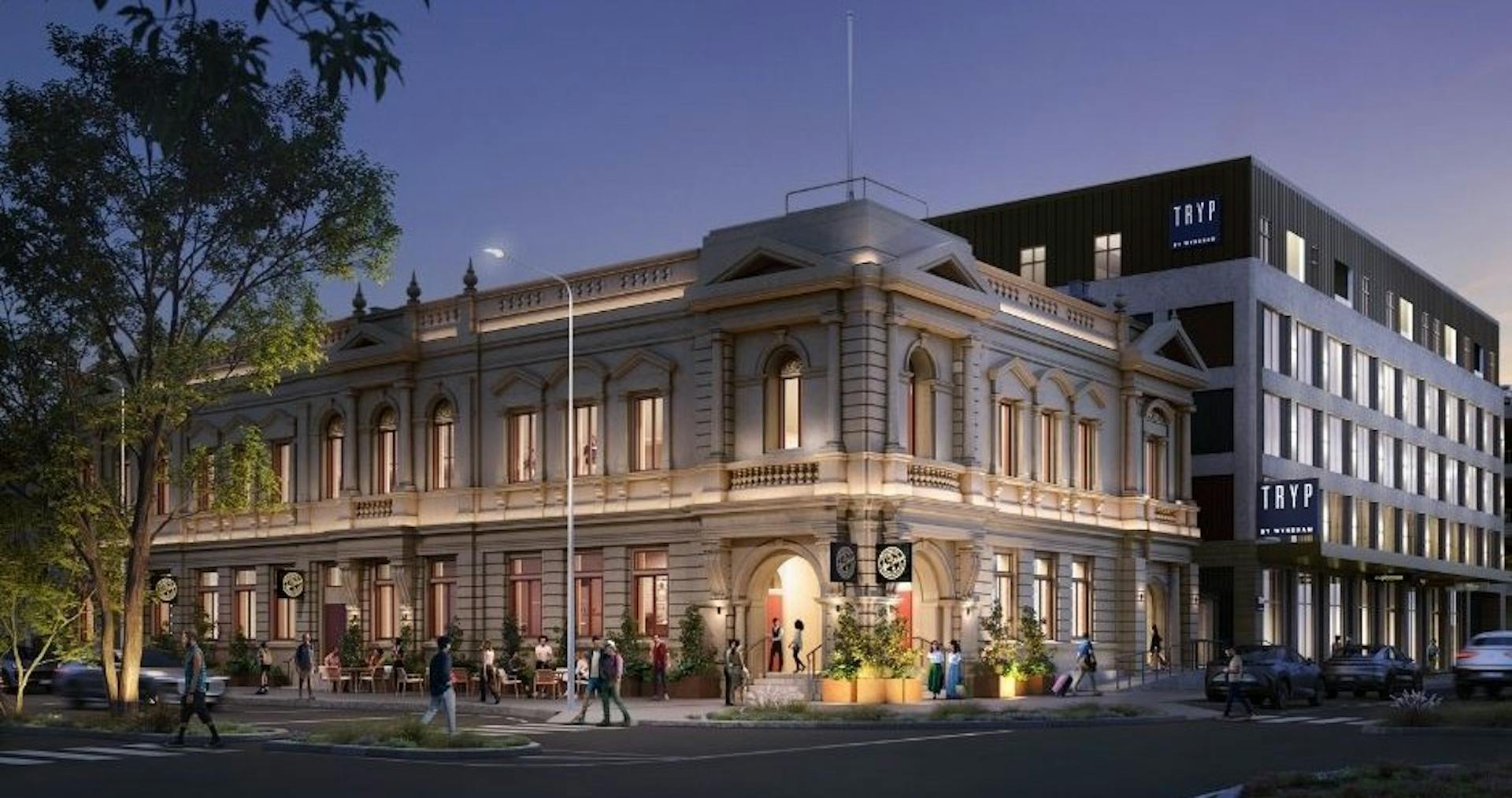
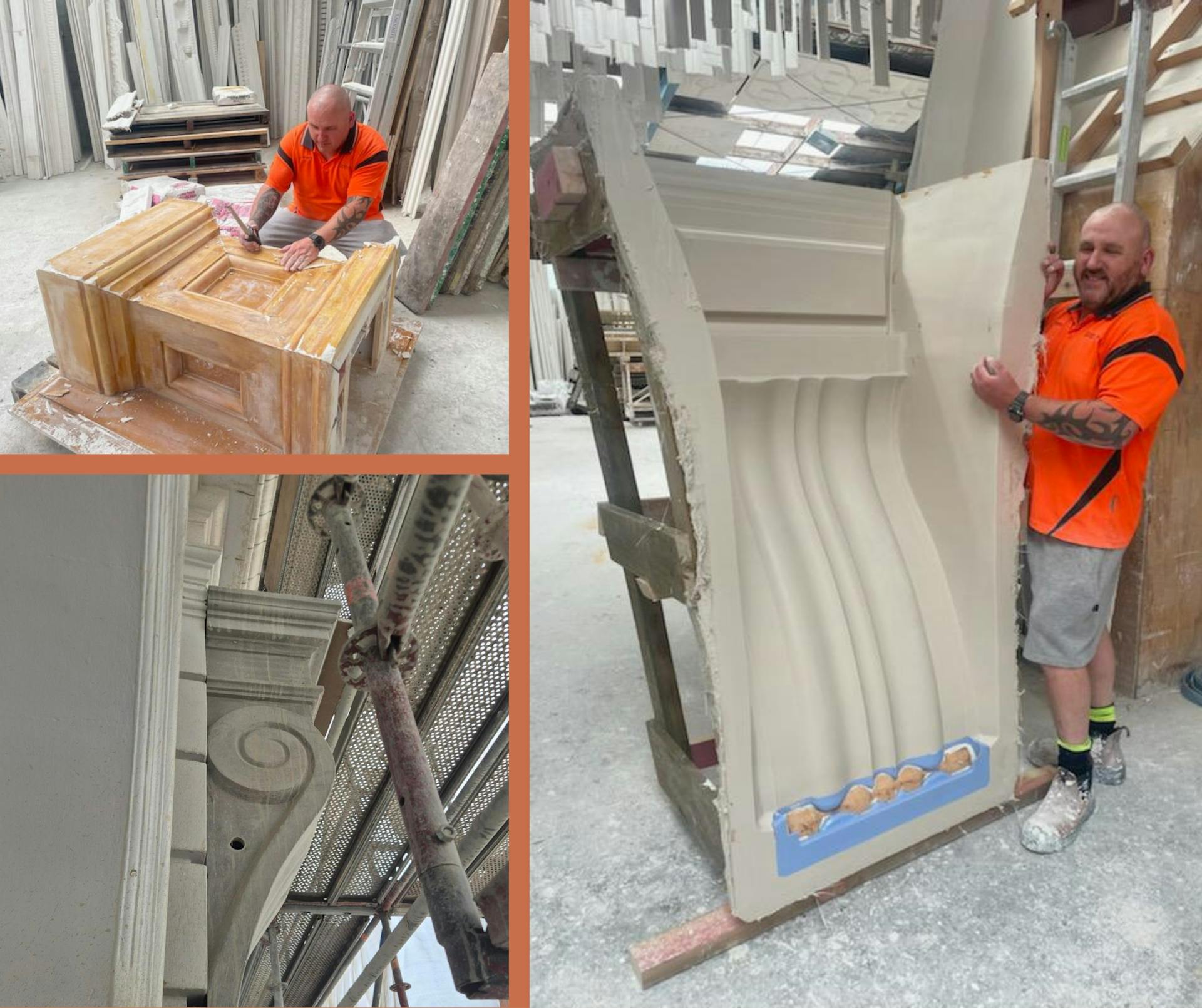
The material salvage strategy reinforced that relationship. Existing timber, glass, and stone from the original building were retained and reintegrated where possible. Reuse carries a building’s history forward. It also carries an argument: that what was here had value, and that value has been taken seriously.
One of the most productive decisions we made was bringing Heritage New Zealand into the process from the beginning. Early alignment on what was protected, what could be altered, and what had to be reinstated removed ambiguity and sharpened the design process. The collaboration was structural, not ceremonial.
What this proves about heritage approaches
The principles that worked in Palmerston North are transferable. Early heritage authority collaboration, a clear position on what is original and what is not, material continuity where possible, and the discipline to keep the new build subordinate to the old. While every heritage project has its own specific constraints, these fundamentals hold across any adaptive reuse brief where a structure carries genuine civic significance.
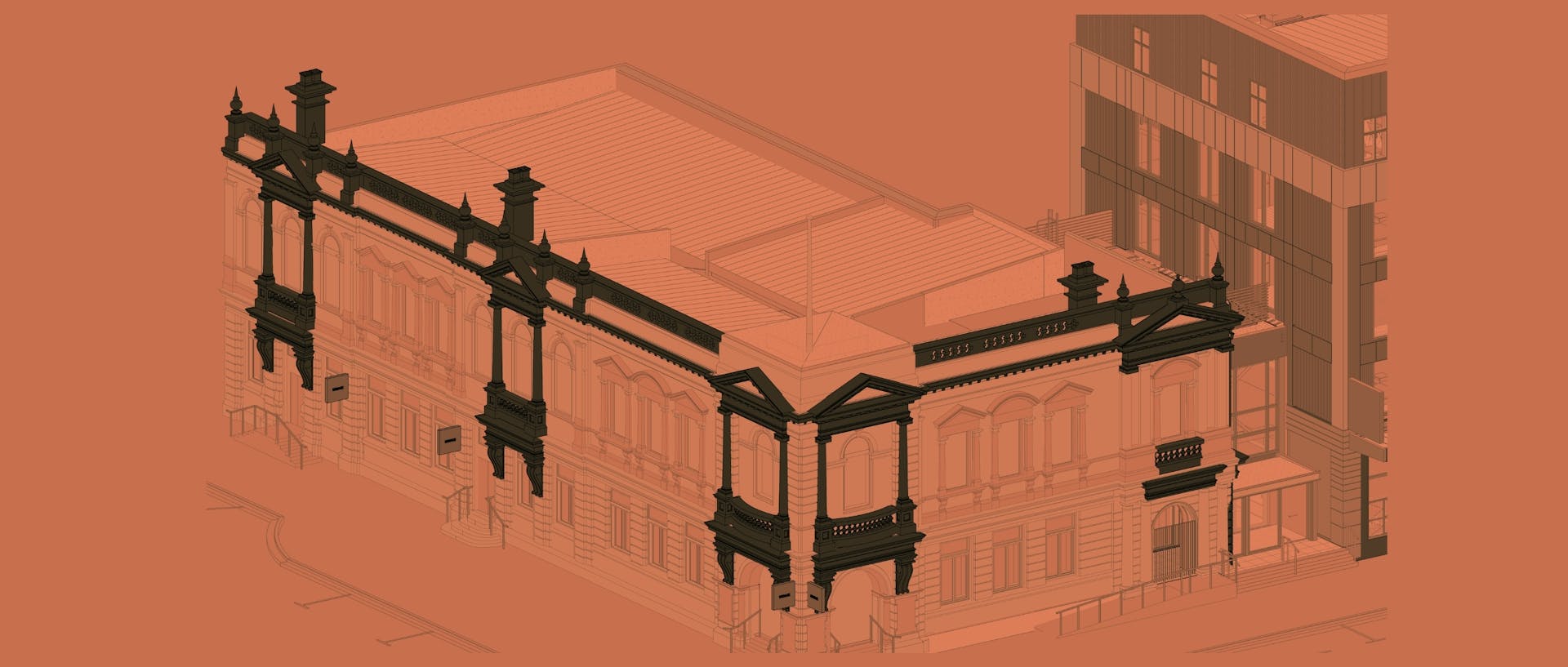
Detailed BIM modelling was central to how we managed that complexity here. Working with existing heritage fabric means working with conditions that are rarely documented, rarely predictable, and rarely forgiving of assumptions. Having a precise digital record of the building’s existing state allowed the team to make decisions based on evidence rather than estimation, and to coordinate heritage requirements, engineering solutions, and construction methodology in the same environment.
The more that level of documentation becomes standard practice on heritage projects, the better the outcomes get.
The New Zealand opportunity
Palmerston North is not an isolated case. Across New Zealand’s regional centres, heritage stock is ageing, underutilised, and at increasing risk. Buildings of real civic significance are sitting empty, their owners uncertain about the commercial case for restoration.
The commercial case is stronger than many developers assume. A restored heritage building in a prominent civic location anchors a development in ways a new build cannot. It carries credibility, context, and the kind of presence that takes a century to earn.
All the same, the returns depend on doing it properly. A retained facade on an otherwise disconnected development delivers neither the heritage outcome nor the commercial one. These sites have presence, civic weight, and a century of earned credibility. That is worth something. The question is whether anyone is willing to do the work to unlock it.