Lived. Designed. Delivered. What Student Accommodation Taught Me.
Insights
01 Jun 2026
I was a boarder through my secondary school years, living in student accommodation long before I’d thought seriously about architecture. By the time I came to choose a university, I had a few years of living away from home under my belt. I knew what it felt like to arrive somewhere new, and I knew the difference a good environment made. When Cardiff University in Wales offered purpose-built student accommodation alongside a strong architecture programme, it wasn’t a gamble. It was an informed choice.The alternative was London: an unknown borough, a bedsit I couldn’t afford to be picky about. Cardiff offered something I already knew the value of. Somewhere to land. People to eat with. A way into a place I didn’t know yet.
Architecture school teaches you to look at buildings differently. You learn to read a facade, to understand structure, to think about light and sequence and materiality. Living in one teaches you something else entirely. It grounds all of that theory in something immediate and human. You stop asking what a building means and start noticing what it does, to your mood, your routines, your willingness to leave your room.
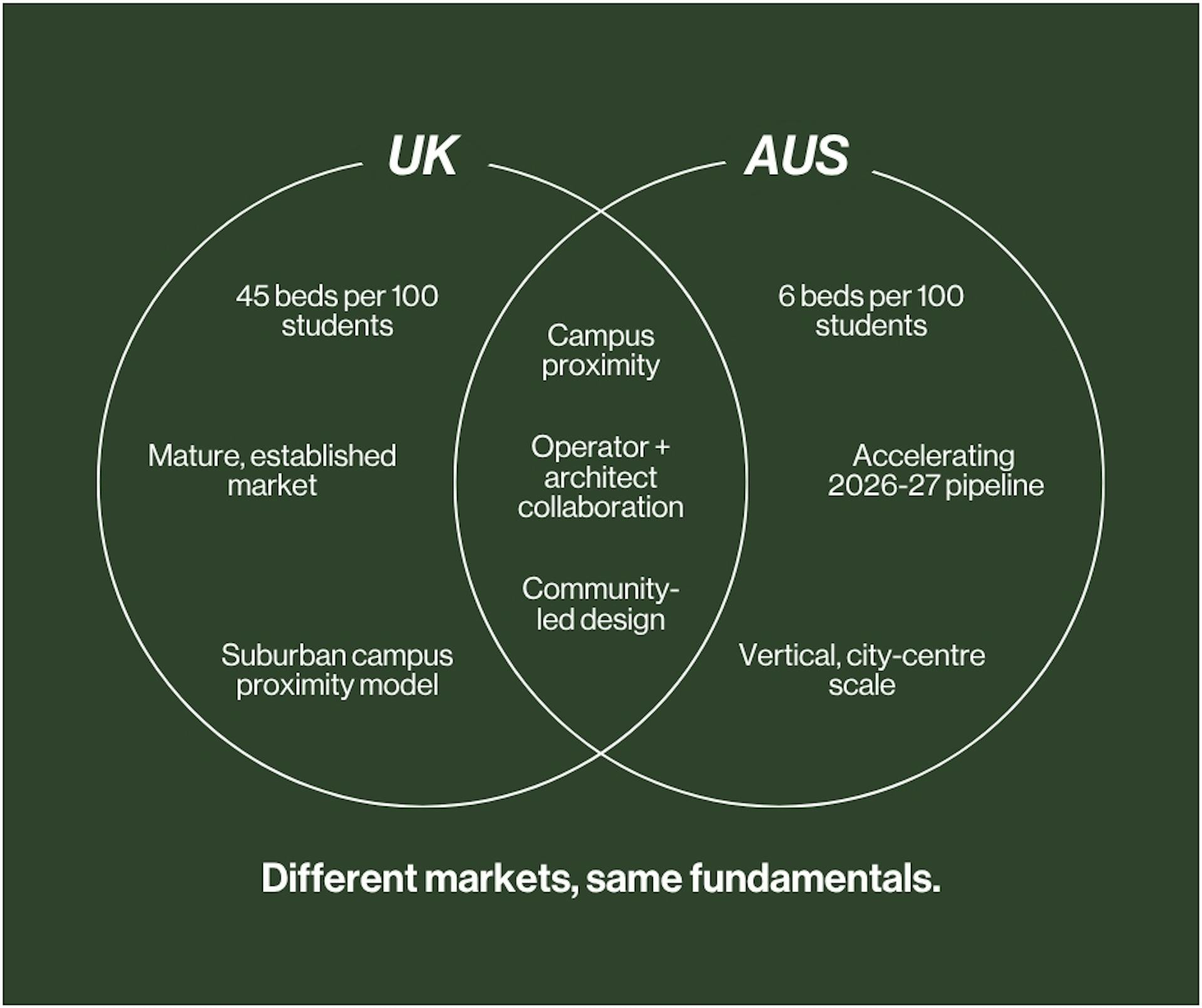
Years later, working at Glenn Howells Architects (now Howells) in Birmingham, I started to understand what had actually been going on. The West Midlands is home to some of the UK’s great universities, and during my ten years there the PBSA sector matured around me in real time. The noughties were a period of rapid expansion, with cash-strapped universities partnering with private providers, major operators carving out genuinely quality products, and investors beginning to treat student housing as a serious asset class rather than a peripheral one. What had once been ad hoc, a spare room, a converted terrace, a hall of residence that felt more institutional than inhabitable, became something considered. Operators started asking harder questions. Architects started giving better answers.By the time I left for Perth in 2013, the UK had become one of the world’s most developed PBSA markets, with forty-five purpose-built beds for every hundred students. Australia, at that point and still today, has six. What closed that gap in the UK wasn’t just capital. It was design.
“By the time I left for Perth in 2013, the UK had become one of the world’s most developed PBSA markets, with forty-five purpose-built beds for every hundred students. Australia, at that point and still today, has six. What closed that gap in the UK wasn’t just capital. It was design.”
Lessons from the UK
The shift didn’t happen because of investment alone. It happened because the sector started asking better questions about what students actually need, and then building around the answers.Proximity came first. The buildings that performed best were the ones closest to campus, closest to transport, closest to the life a student was trying to build. Not the ones with the most amenity. Location turned out to matter more than any rooftop terrace.
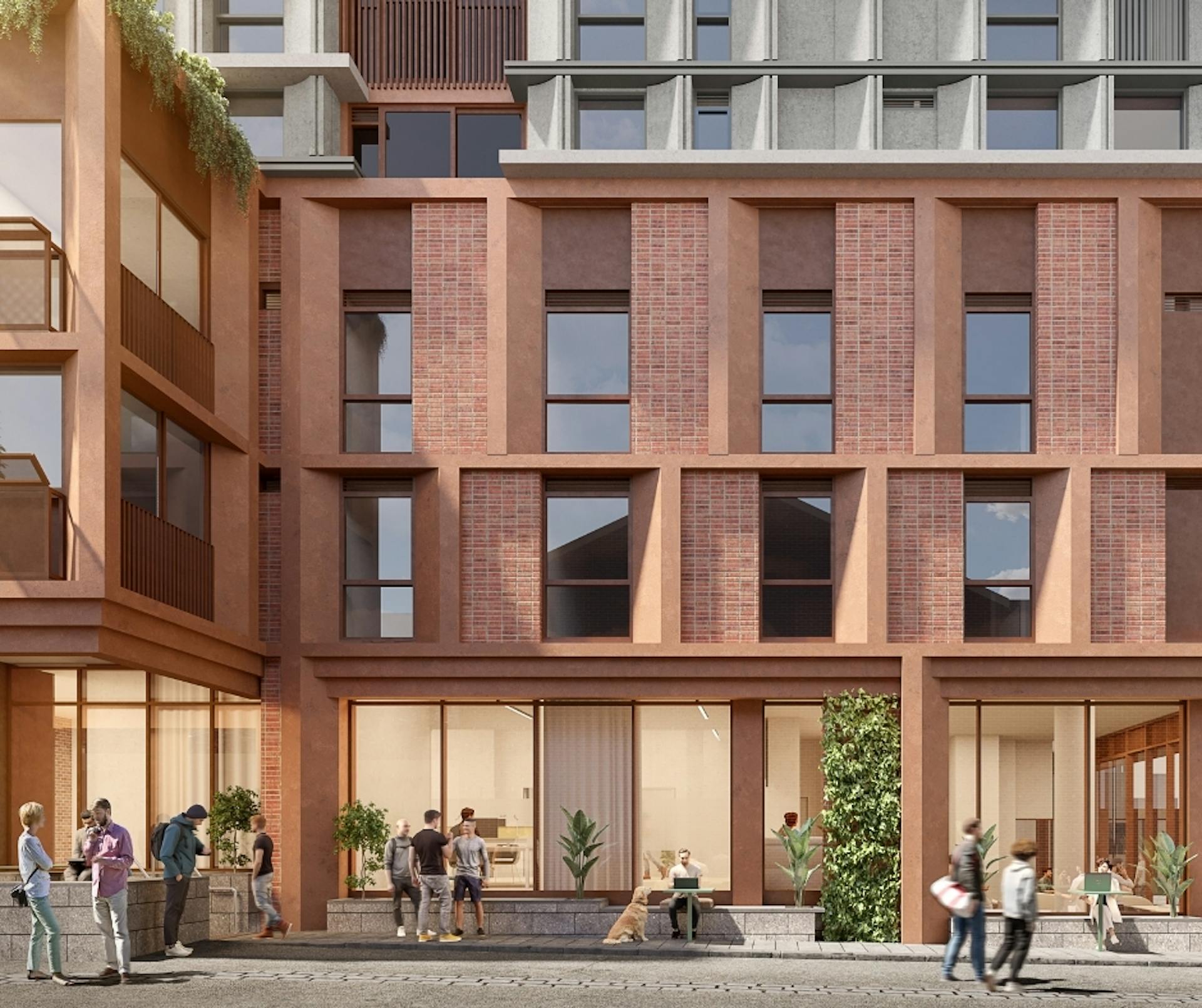
Community came second. The UK learned, sometimes the hard way, that a well-designed communal space is worth more than a dozen underused facilities. The common areas that worked were the ones that made accidental encounters possible. A kitchen you actually want to cook in. A corridor wide enough to stop and talk. Small decisions with outsized effects on whether a building feels alive or empty.
And the third thing: operators and architects started working together earlier. The best buildings weren’t designed in isolation and handed over. They were shaped by people who understood how students actually move through a place, and crucially, how they feel when they’re far from home. The pastoral care role that operators play in supporting student life, particularly for international students navigating a new country and culture, became central to how good PBSA was conceived and run. That understanding changed what was possible.
What we’re still learning
Australia is working through its own version of these questions, and the answers aren’t always the same, nor should they be. In some respects, Australian PBSA has developed a design intelligence the UK hasn’t matched. The willingness to build at scale in city centres has produced a different kind of student precinct, vertical, generous in amenity, and genuinely responsive to an international student market that expects a high-quality offer. Scape Kensington in Sydney is a good example: density, proximity to university, the specific needs of a highly international cohort in one of Australia’s most pressured rental markets. Climate is another area where Australian design has found its own footing. Passive cooling, solar shading and cross-ventilation are fundamental to how a building performs in Perth, Brisbane or Adelaide, a different technical language to the UK’s focus on thermal retention, and no less rigorous for it.Where the learning continues is in affordability. This is the conversation the sector hasn’t fully resolved, and inflation has made it more urgent. Rising construction and operating costs have put pressure on rents at exactly the moment when students, particularly international students, are most price-sensitive. The quality argument is easy to make at the premium end. Making it across the full market, and designing well at every price point, comes down to being clear about what matters most, and focusing quality where it has the greatest impact on daily student life.
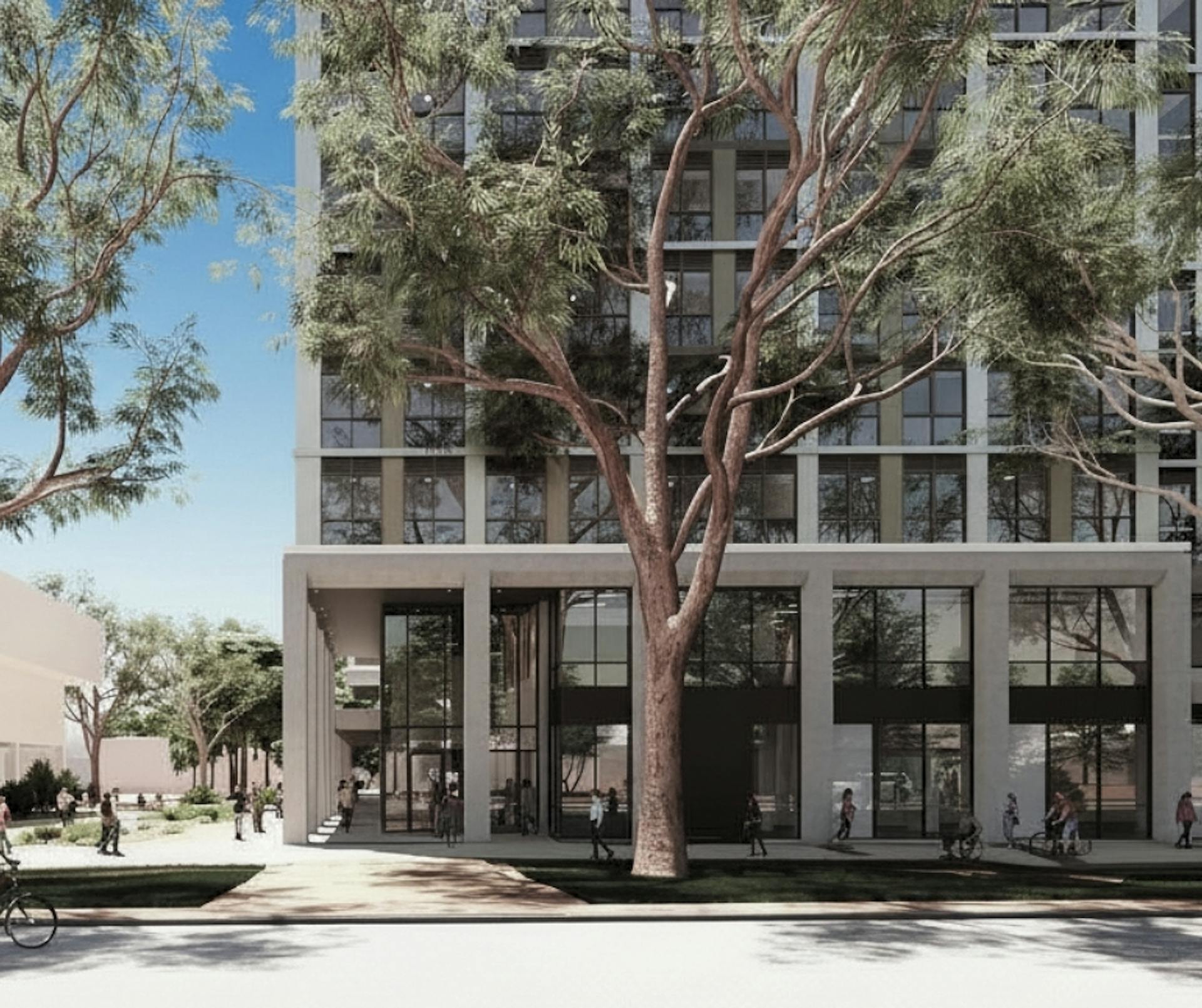
Specificity matters too. Each Australian city has its own logic. Perth’s rental market and campus geography ask different things of a building than Sydney’s inner suburbs or Brisbane’s emerging university precincts. At UWA, the answer had everything to do with the campus itself, a setting of genuine beauty that the accommodation needed to earn its place within. The buildings that will age well are the ones designed for a particular place, a particular cohort, a particular set of daily rhythms.
The conversations happening in Australian boardrooms and planning departments today are not so different from the ones that took place in Birmingham in the early 2000s. The scepticism about whether design quality actually matters. The growing recognition that it does. The gradual shift from building beds to building places.
Since moving to Perth, I’ve been watching the PBSA market find its feet ever since. What strikes me most is how familiar the energy feels. The conversations happening in Australian boardrooms and planning departments today are not so different from the ones that took place in Birmingham in the early 2000s. The scepticism about whether design quality actually matters. The growing recognition that it does. The gradual shift from building beds to building places.Over a decade ago, Savills identified Australia as a market at an early stage of development, with strong demand, low vacancy, rising rents, and a shortage of quality accommodation. Now, with around 35,000 beds in the national pipeline and completions projected to accelerate through 2026 and 2027, the sector is moving with real intent. The conversation has shifted from whether to build to how to build well.
Across Australia, our work at Plus Studio has been shaped by the same questions I was first asking as a student in Cardiff. What does someone need when they arrive somewhere new? What makes a building feel like somewhere worth staying?In Brisbane, Scape Tribune brought student accommodation back to a city that had seen years of limited supply. In Melbourne, 235 Bourke Street found a second life as student residential, a reminder that the best solutions don’t always start from scratch. In Adelaide, an adaptive reuse project in the city centre, where the PBSA sector is only beginning to find its feet.What I’ve learned, from Cardiff to Birmingham to Perth and beyond, is that the fundamentals don’t change much. Students want to walk to lectures. They want to feel safe. They want to meet people without it feeling engineered. The buildings that hold up are the ones that get those things right before they worry about anything else.